About WeTrip
Your Trusted Way to China
U.S.-registered and backed by Nasdaq-listed WeBuy Global Ltd., supported by professional teams across Singapore, China, and Malaysia.
Follow Us




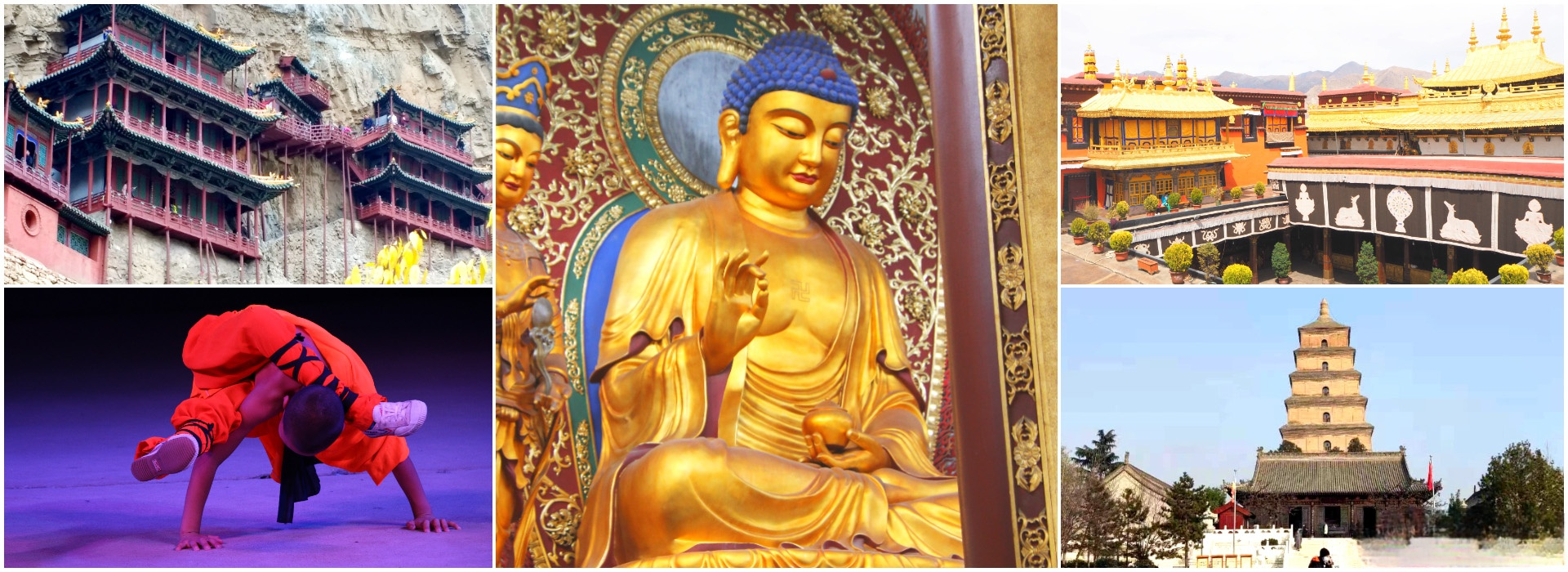
The Buddhism was introduced to China during the Christian era, gaining a foothold during the Western Han and Eastern Han Dynasties (202 BC - 220 AD). Rooted in the teachings of Siddhartha Gautama, this profound philosophy found resonance across diverse realms of Chinese society. As Buddhism flourished, it became a pervasive influence, leaving an indelible mark on Chinese philosophy, literature, art, politics, medicine, and material culture.
Geographically, Buddhism is traditionally categorized into Han Buddhism, Tibetan Buddhism, and Theravada Buddhism. Doctrinally, Buddhism is classified into Mahayana Buddhism and Theravada Buddhism. In terms of practice, Buddhism is further divided into Exoteric Buddhism (Mahayana) and Esoteric Buddhism (Vajrayana or Tantric Buddhism). Within Exoteric Buddhism, there are ten major schools including Chan (Zen), Pure Land, Tiantai, and Huayan.
The subsequent centuries witnessed the construction of numerous temples and monasteries, becoming sanctuaries where Buddhist teachings thrived with spiritual messages. Thus, to explore the top 10 Buddhist temples and monasteries in China becomes a journey through time. Also, more Buddhist destinations have been devotees' top choices such as Top 10 Buddhist Grottoes & Caves in China and Four Sacred Buddhist Mountains in China ,etc.
Originally established in 495 during the Northern Wei Dynasty, Shaolin Temple perches majestically on Wuru Peak of Mount Songshan. Commissioned by Xiaowen Emperor to house the revered Indian monk Buddhabhadra, this sacred site became a cradle of spiritual wisdom. Just 32 years later, the venerable Indian monk Bodhidharma arrived, bringing with him the teachings of Zen Buddhism. Bodhidharma, now revered as the ancestor court of Zen Buddhism, transformed Shaolin Temple into the ancestral haven of Zen. This tale of spiritual evolution intertwines seamlessly with the roots of Chinese Martial Arts, as Shaolin Temple emerged as the birthplace of Chinese Martial. Spanning over 1500 years, Shaolin Temple has evolved into a globally renowned Buddhist sanctuary. Its architectural gems include the grand Daxiong Hall, the tranquil Chuzu Temple—home to the oldest wooden structure in Henan Province—and the revered Arhat Hall, where enlightened monks find eternal peace.
Venture into the Forest of Steles, where 248 brick pagodas stand sentinel, housing the ashes of eminent monks. This sacred grove represents the largest surviving collection of steles in China, a testament to the profound spiritual legacy of Shaolin Temple. Amidst this historical backdrop, the temple's dazzling Kung Fu Show has become a magnet for visitors worldwide, adding a vibrant chapter to Shaolin's narrative that echoes through the ages. After immersing themselves in the serene aura of the Shaolin Temple, many visitors often choose to extend their exploration to iconic sites like the Longmen Grottoes and White Horse Temple. This seamless transition allows them to delve even deeper into the rich tapestry of Buddhist culture, unlocking a more multifaceted experience.
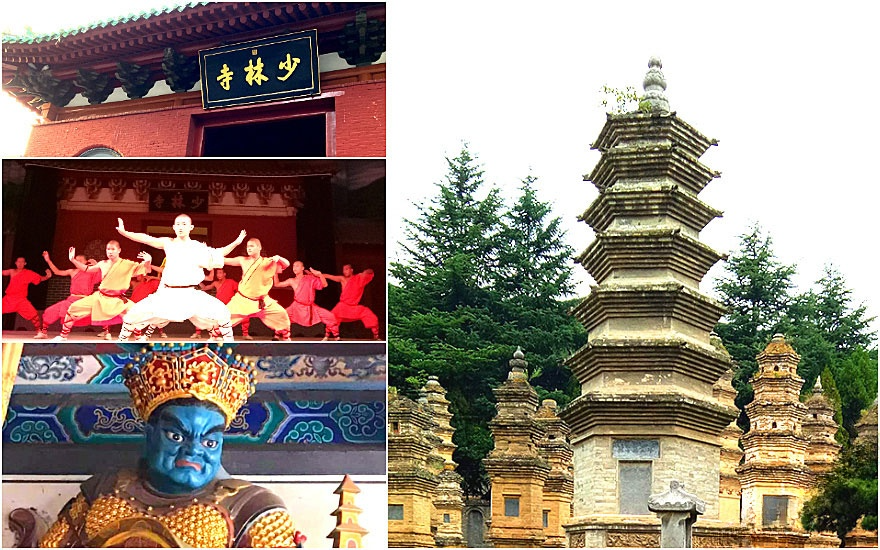
Shaolin Temple - Birthplace of Chinese Martial Arts
In the year 64 AD during the Han Dynasty, a captivating tale unfolded that would shape the destiny of White Horse Temple. Legend has it that the emperor, in a visionary slumber, witnessed a golden figure believed to be Buddha soaring to his palace. Fueled by this celestial encounter, the emperor dispatched envoys on a three-year odyssey to the enigmatic western regions in pursuit of sacred Buddhist scriptures. The culmination of this journey saw the arrival of two revered Indian monks, Kasyapamatanga and Dharmaratna, astride white horses laden with precious Buddhist statues and scriptures. In 68 AD, inspired by a fervor for Buddhism, the emperor conceived the idea of a temple dedicated to the teachings of the enlightened one. Thus, White Horse Temple emerged—the inaugural beacon of Chinese Buddhism. Within its sacred precincts, the two monks embarked on the monumental task of translating the Forty-two Chapters Buddhist Sutras, giving birth to the first Chinese Buddhist scripture. A pilgrimage of western monks followed, converging upon White Horse Temple to impart sermons and translate scriptures. In the next 150 years, 395 scriptures were translated to Chinese. As a result, the temple became the first Ashram for translating scripture.
Stepping into the temple, one encounters the architectural symmetry typical of Chinese tradition. Amidst the echoes of bygone eras, remnants of precious statues bear witness to the temple's resilience through times of destruction. Guarding the entrance are stone horses, silent sentinels to the tales that unfold within. Traverse the halls in sequence, and you'll stumble upon the tombs of the pioneering Indian monks. The journey culminates in the Cool and Clear Terrace—an erstwhile palace of translating scriptures, resonating with the wisdom of ages. Outside the temple is tiered with Qiyun Pagoda (oldest pagoda in China) and foreign temple, including Indian Temple, Thailand Temple and Burmese Temple, showing the cultural exchange and harmonious interplay between China and the world. Following a visit to the White Horse Temple, many travelers opt for an enriching detour to the legendary Shaolin Temple. Here, they can immerse themselves in the authentic world of Chinese martial arts.
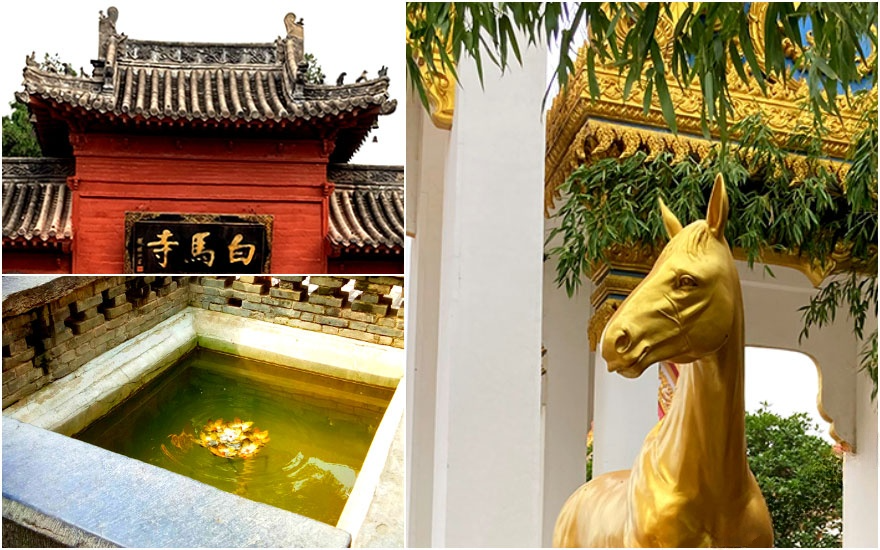
White Horse Temple - First Buddhist Temple in China
Jokhang Temple stands as the beating spiritual heart of Tibet, a hallowed pilgrimage site for devoted Buddhists. Its origins weave a tale back to the 7th century when the visionary Tibetan King Songtsan Gampo issued a decree to construct the temple, a sanctuary intended to cradle the sacred statue of Shakyamuni, a precious gift from Nepal. Initially dubbed Rasa, it is whispered that the name Lhasa itself found its inspiration in this revered artifact. Soon after, the enchanting saga expanded as the Wencheng Princess journeyed from China, gracing Jokhang with a life-sized statue of the 12-year-old Jowa Sakyamuni. This gift not only bestowed the temple with its identity, Jokhang, meaning the "house of Buddha," but also infused it with an unparalleled spiritual vigor.
The architectural symphony of Jokhang Temple resonates with the sacred geometry of the Manda, a design that captivates the beholder from the very first glance. The crowning jewel is the resplendent Gold Roof, a beacon that guides one's gaze to the panoramic vistas of Barkhor Street and the majestic Potala Palace. Venture within, and you'll encounter a celestial congregation of Buddha statues, each cradled within its own chapel. The ethereal allure extends to the hanging Thangkas, inviting admiration from all who behold them. Beyond the temple's confines, Jokhang Temple Square pulses with an unceasing rhythm of devout pilgrims, who prostrate themselves day and night. These fervent seekers traverse vast distances, arriving from the far reaches of the countryside annually, driven by an unwavering belief that their sincere devotion will usher happiness, safety, and well-being into the lives of their cherished families. Many travelers are drawn to embark on a classic journey through Lhasa. The spiritual ambiance of the sacred site sets the perfect tone for an immersive experience, making it a natural segue into the enchanting wonders that await in the heart of Tibet's capital.
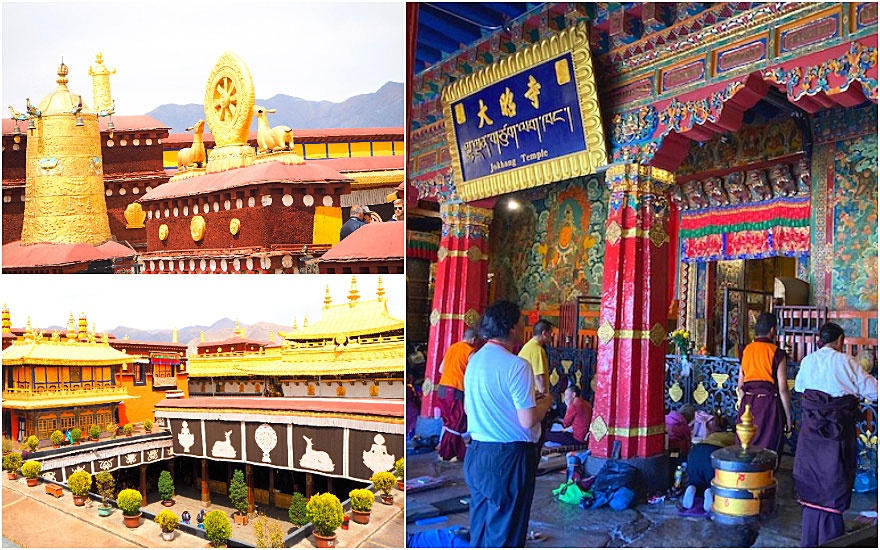
Jokhang Temple - Spiritual Heart of Tibet
Lingyin Temple, founded in 326 AD by an Indian monk enchanted by the ethereal peaks of Hangzhou, unveils a rich tapestry of history and spirituality. Picture this: an awe-inspiring temple nestled between the foliage-draped Feilai Peak and the majestic Begao Peak, aptly named "Linyin," translating to the soul's retreat. During the Northern and Southern Dynasty, the temple flourished, its growth fueled by the benevolence of Liangwu Emperor, endowing it with vast lands. At its zenith, Lingyin Temple was a vibrant community, boasting a staggering population of 3,000 monks. In the Song Dynasty, the revered Feilai Peak earned acclaim as one of the five Jiangnan Zen Buddhist Mountains in Jiangnan, a testament to Lingyin Temple's esteemed status.
Embarking on a journey to this ancient sanctuary, one unravels a tapestry of natural wonders and cultural marvels. Picture the Hall of Heavenly Kings, standing proudly as the first structure along Lingyin Temple's axis, housing the divine Future Buddha. Within the Grand Hall of Great Sage, a captivating statue of Sakyamuni, perched on a lotus flower, emanates a palpable energy. Behind this masterful creation, a cluster of tridimensional statues, featuring Bodhisattva and 150 smaller figures, awaits discovery. The Palace of Medicine Buddha beckons worshipers seeking solace from ailments, a revered sanctuary for healing. And who could overlook the mesmerizing Feilai Peak? Venture into the grottoes within, and a treasure trove of Buddhist carvings unfolds, each chiseled masterpiece narrating tales of devotion and artistry. Following Lingyin Temple, tourists often opt to explore the allure of Hangzhou's West Lake and Wuzhen Water Town, immersing themselves in the cultural wonders of Jiangnan (江南).
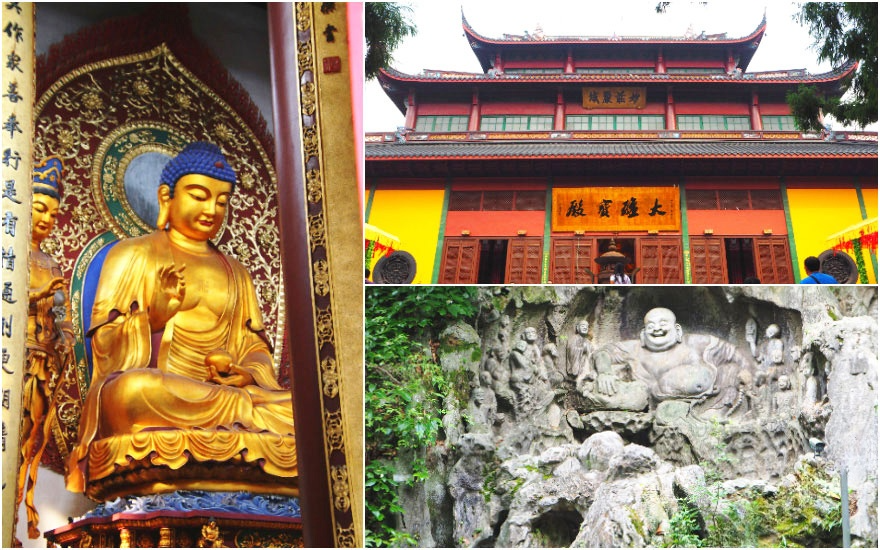
Lingyin Temple - Soul's Retreat
Embark on a journey through time in the heart of Xi'an, where the Great Ci'en Temple stands as a living testament to over 1300 years of captivating history. Picture the scene during the Tang Dynasty, when this cultural oasis was brought to life, now revered as a UNESCO Cultural Heritage site that whispers tales of ancient Buddhist wonders.
The towering Giant Wild Goose Pagoda, a majestic silhouette against the Xi'an skyline, is the crown jewel of the temple. Imagine the celestial aura surrounding this architectural marvel, a tangible link to the spiritual legacy of the Tang Dynasty. Venture into the pagoda's embrace, conceived to safeguard the sacred Buddhist scriptures that traversed the vast expanse from India with the fearless Xuanzang. Delve into the narrative of Xuanzang's extraordinary odyssey as relics and artifacts unfold the chapters of his incredible journey. Traverse the temple grounds, where the echoes of Tang Dynasty architecture whisper secrets of a bygone era. As the sun sets, surrender to the allure of nightly cultural performances that weave a spellbinding tapestry, transforming the temple into an ethereal realm resonating with the spiritual essence of its ancient Buddhist origins. Following a visit to the majestic Giant Wild Goose Pagoda, it's common for tourists to venture towards the globally acclaimed Terracotta Army and the ancient city walls. This natural progression allows them to delve further into history, seamlessly connecting the tranquility of the temple to the historical wonders.
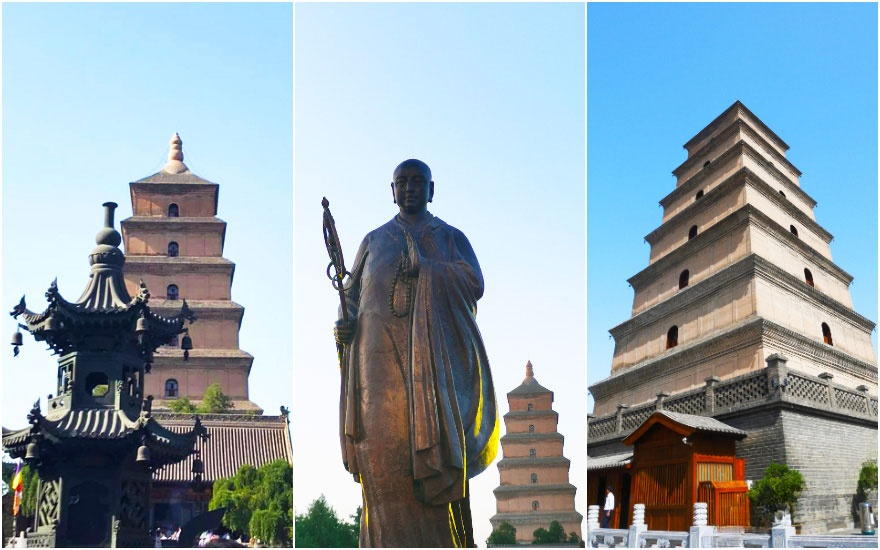
Dacien Monastery - Tang Dynasty Legacy
Step into the captivating tale of Famen Temple, a sacred sanctuary with roots tracing back to the end of the Eastern Han Dynasty. Imagine the ebb and flow of its history as it stood resilient through reconstruction, evolving into an imperial temple during the grandeur of the Tang Dynasty. Yet, the winds of change blew after the Ming and Qing Dynasties, casting a shadow over this once-majestic temple.
Fast forward to 1987, a pivotal year that unveiled the hidden treasures of Famen Temple's Underground Palace. Picture the moment when over 2000 cultural relics, adorned with the splendor of the Tang Dynasty, emerged into the light. Buddha's relics, glistening gold and silver artifacts, vibrant colored glaze, delicate ceramics, silk weaving tales of antiquity, and the enigmatic Finger Sarira of Sakyamuni – a discovery that resonated with the divine. Among the findings were four sarira, three deemed as duplicate relics, standing as guardians to the true relic – the sacred finger bone of Sakyamuni. This revelation transformed Famen Temple into a revered pilgrimage site, earning UNESCO's acclaim as the ninth wonder of the world. Today, Famen Temple unfolds its narrative across three chapters – the Old Famen Pagoda, the Namaste Dagoba, and the Famen Temple Museum. Picture the ancient secrets housed within the Old Famen Pagoda, where the Underground Palace cradles the cherished duplicate relics. The Namaste Dagoba, a modern marvel shaped like folding hands, designed by the renowned architect Mr. Li Zuyuan, cradles the revered sarira of Sakyamuni since its construction in 2009. As you venture into the Famen Temple Museum, immerse yourself in valuable treasures, from the resplendent Gilded Bronze Buddha to the intricate Mystic Color Ceramics.
Tips: The Finger Sarira of Sakyamuni was only displayed in weekends, the lunar 1st and 15th day of every month, and some special festivals usually. If you want to pay homage to the sarira, make sure you visit in the right day.
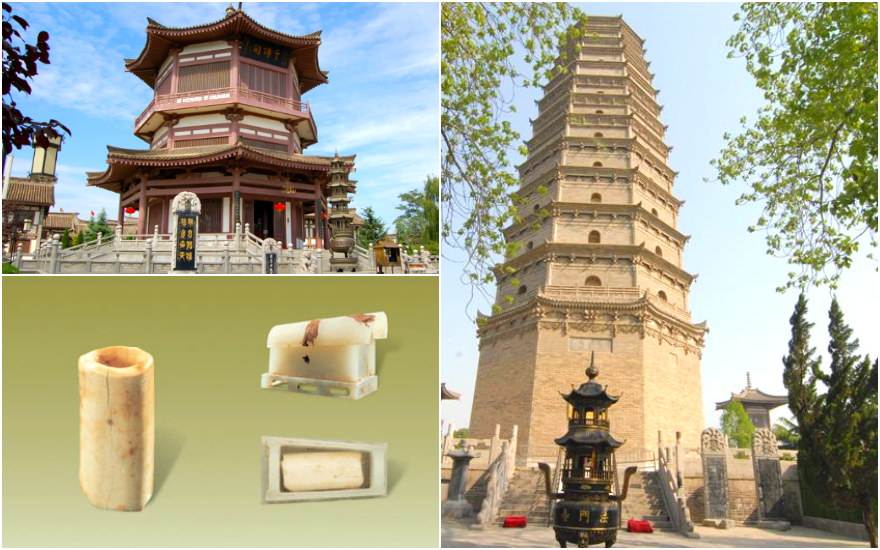
Famen Temple - Custodian of Buddha's Relics
Established more than a millennium ago, South Puto Temple stands as a beacon of Buddhist spirituality, nestled in the coastal city of Xiamen, Fujian Province. The temple's origins trace back to the Tang Dynasty, making it a venerable site of over 1000 years. The heart of South Puto Temple lies in its Grand Hall of Buddha, an architectural masterpiece that echoes with ancient chants and serenity. Adorned with intricate carvings and vibrant murals, the hall houses majestic statues of Buddhist deities, creating a sacred atmosphere for worship and meditation. As you stroll through the temple grounds, you'll encounter the tranquil Lotus Pond, where delicate lotus flowers bloom in a serene aquatic dance. This scenic spot provides a perfect setting for contemplation and spiritual reflection.
South Puto Temple takes pride in its Buddhist Scriptures Repository, a treasure trove of ancient texts and teachings. The repository is a testament to the temple's commitment to preserving and disseminating Buddhist knowledge, attracting scholars and devotees alike. The temple serves as a hub for cultural exchange, welcoming visitors from around the world to explore the richness of Chinese Buddhism. The Cultural Exchange Center within the temple premises offers programs and activities that promote understanding and harmony among diverse communities. South Puto Temple, with its rich history and cultural significance, has garnered recognition as a prominent Buddhist academy. It continues to be a magnet for overseas followers seeking spiritual enlightenment and a deeper understanding of Buddhist teachings. The temple's reputation extends far beyond its physical boundaries, making it a revered destination for those in search of tranquility and wisdom. After a serene visit to the South Putuo Temple, many travelers choose to extend their journey to the enchanting Tulou with its mesmerizing nightscapes and the charming island of Gulangyu for both cultural and scenic delights.
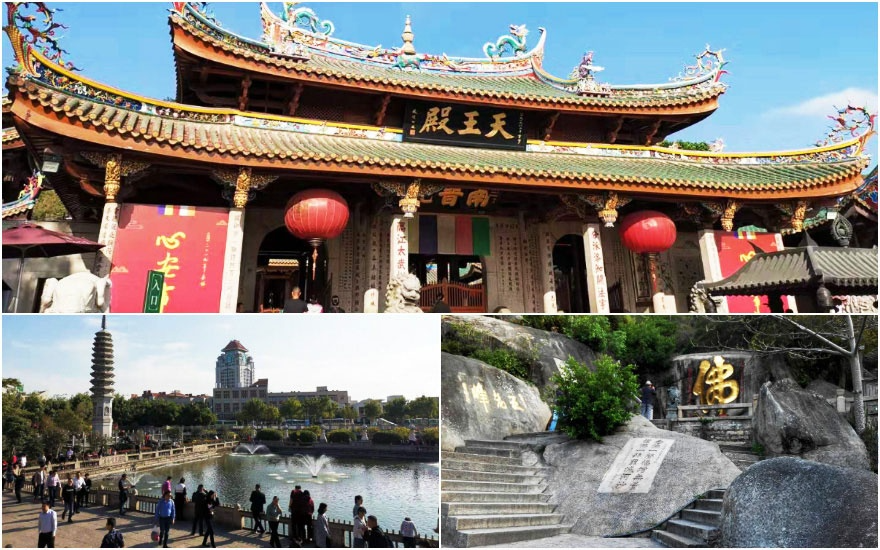
South Puto Temple - Buddhist Academy
Perched daringly on a cliff, Hanging Temple lives up to its name, suspended a jaw-dropping 50 meters above the ground. Imagine the audacity of a temple clinging to the rock face without any visible crutches, a marvel that even earned it a spot on Time magazine's list of the world's top ten most bizarrely precarious structures. The temple's saga unfolds like a gripping tale – a fearless feat of construction, defying gravity and leaving visitors awe-struck. Delve into the secrets of the Hanging Temple, where architectural ingenuity meets ancient mysticism. It was constructed without any supportive structures, which adds an element of suspense to the narrative, eventually leading to the incorporation of pillars as a testament to the collective hesitation of those daring to step into this cliffside sanctuary. Behind the scenes, hidden upholders within the bedrock reveal a dance with mechanics, turning the temple into a masterpiece of engineering artistry. As the story unfolds, it becomes evident that the Hanging Temple is not merely a physical marvel but a harmonious convergence of China's three venerable traditions – Buddhism, Taoism and Confucianism.
Navigate the intricacies of the Hanging Temple's main structures – the Southern Pavilion, Northern Pavilion, and Changxian Bridge – each telling a unique chapter in this cliffside chronicle. Picture the Southern Pavilion, a three-story spectacle housing Chunyang Palace, Sanguan Hall, Sangong Palace, and Leiyin Hall. In the grandeur of Sangong Palace, witness the temple's largest hall, while the towering sculpture within Sanguan Hall stands as a silent guardian of its history. Traverse to the Northern Pavilion, where Wufo Hall, Guanyin Hall, and Sanjiao Hall unfold their tales. Here, statues of the founders of three religions – Shakyamuni, Laozi, and Confucius – find a sacred abode in the venerable Sanjiao Hall. Adorned with intricate carvings and a myriad of statues, the Hanging Temple invites explorers to unravel its rich tapestry of stories, where the line between architectural marvel and spiritual pilgrimage blurs into a captivating narrative.
Tips: Make sure you arrive there early in the morning, because the place is very small and if you find a long queue you might risk losing a lot of time before getting inside.
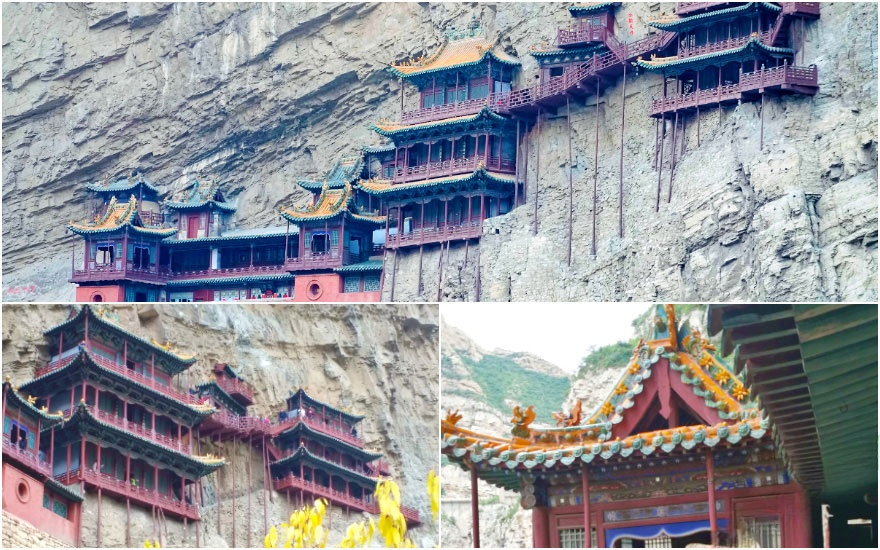
Hanging Temple - Architectural Marvel
Embark on a journey through time at Wenshu Monastery, a spiritual haven that traces its roots back to the Sui Dynasty (605 ~ 617). With long history and strong Buddhist influence, Wenshu Monastery is one of the Four Chinese Zen Buddhist Monasteries. Though it located in the busy downtown area of Chengdu, Wenshu Monastery enjoys a tranquil atmosphere fabulously. Initially a modest courtyard, the monastery underwent a captivating transformation during the Song Dynasty, when it donned the name Xinxiang Temple, only to face the ravages of war. In a mystical twist during the Qing Dynasty, whispers of the Manjusri Bodhisattva's ethereal presence, cloaked in red light, sparked a resurrection. The temple, now reborn, earned the name Wenshu Monastery, paying homage to the revered Manjusri.
Nestled amidst the hustle and bustle of Chengdu's downtown, Wenshu Monastery defies its urban surroundings, cocooning visitors in a serenity that feels almost otherworldly. Picture the main structures, traditional Chinese palaces adorned with the elegance of the Qing Dynasty, their upturned eaves reaching towards the heavens. Here, the axis from gate to Sutra Mansion unfolds like a sacred thread weaving through the tapestry of history. Within these ancient walls, a treasure trove of Buddhist scriptures, paintings, and calligraphy awaits, whispering stories of enlightenment to those who listen. Beyond the quiet contemplation, Wenshu Monastery reveals itself as a haven for the soul. The revered Teahouse, a bastion of old-school charm, beckons with the aroma of Chinese tea and the allure of traditional folk shows. Step into the nearby Vegetarian Restaurant, where culinary excellence fuses with spirituality, offering a feast of delectable vegetarian dishes. Take a leisurely stroll through the monastery's hallowed grounds, where every step unveils a chapter of the past. After immersing in the cultural ambiance, visitors often embark on a classic Chengdu tour, exploring attractions like the Panda Base. Moreover, they may opt for a deeper Sichuan experience, venturing to renowned sites such as the Leshan Giant Buddha, Mount Emei, and Jiuzhaigou. This flexible transition caters to diverse preferences, ensuring an enriching journey through the cultural and natural wonders of the region.
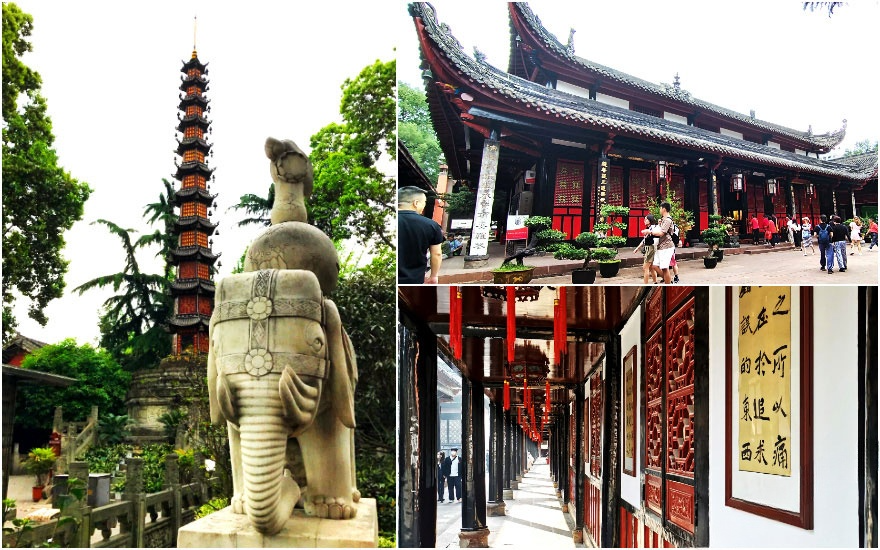
Wenshu Monastery - Southwest China's Spiritual Citadel
Step into the enchanting tapestry of Nanjing's Foding Temple, a resilient architectural masterpiece that has weathered the sands of time for over 1200 years. Here, the grandeur of the Ming Dynasty unfolds like a captivating saga, each stone whispering tales of an era long past. Picture the Buddha's Relic Pagoda, a sacred space where the air itself seems to shimmer with the divine presence of relics. Immerse yourself in the hallowed ambiance, where the convergence of the sacred and architectural beauty dances through the corridors of time.
As you traverse the temple grounds, be transported to the majestic Hall of Heavenly Kings, where colossal statues stand as sentinels guarding the spiritual sanctuary. It's not just a hall; it's a living tableau of devotion and reverence, where the echo of centuries-old prayers reverberates through the air. The temple, a living embodiment of Ming Dynasty opulence, invites exploration into its labyrinth of intricate designs and historical significance. But the journey doesn't end there; adjacent to the temple rises the towering Linggu Pagoda, a stoic symbol of endurance that pierces the sky, a silent witness to the passage of centuries. Foding Temple beckons you into a time-traveling odyssey, where the legacy of the Ming Dynasty isn't confined to dusty history books but resonates through the very stones that have stood witness to centuries of stories. Having explored the serenity of Foding Temple, many travelers opt for more highlights of Nanjing including the Confucius Temple Nanjing, the picturesque Qinhuai River. This curated experience allows visitors to feel the essence of "misty rain in the south of the Yangtze"(烟雨江南).
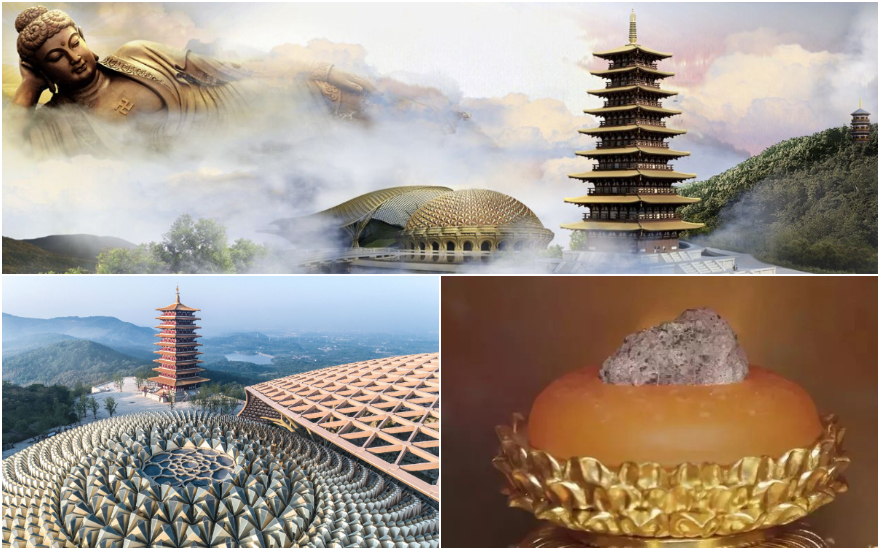
Foding Palace - Ming Dynasty's Architectural Marvel
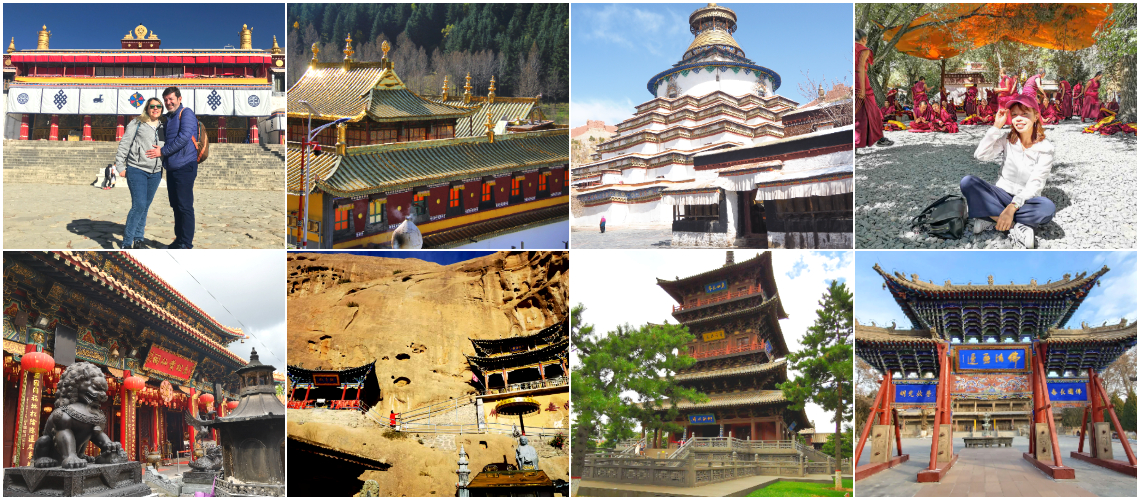
The top 10 sites not only stand as testament to spiritual devotion but also as living embodiments of the enduring cultural legacy shaped by the profound teachings of Buddhism. Moreover, there are more well-known Buddhist Temples and Monasteries for you to explore, such as Guoqing Temple, Puji Temple, Kumbum Monastery, Palcho Monastery, Matisi Temple, Wong Tai Sin Temple,etc. Delving into these historical and cultural treasures, one witnesses the dynamic evolution of Chinese Buddhism and its harmonious integration into the broader tapestry of Chinese civilization.






About WeTrip
Your Trusted Way to China
U.S.-registered and backed by Nasdaq-listed WeBuy Global Ltd., supported by professional teams across Singapore, China, and Malaysia.
Follow Us